ASCO 2026
Interviews and expert commentary from ASCO 2026 — study authors and key opinion leaders discuss the findings and their clinical implications.
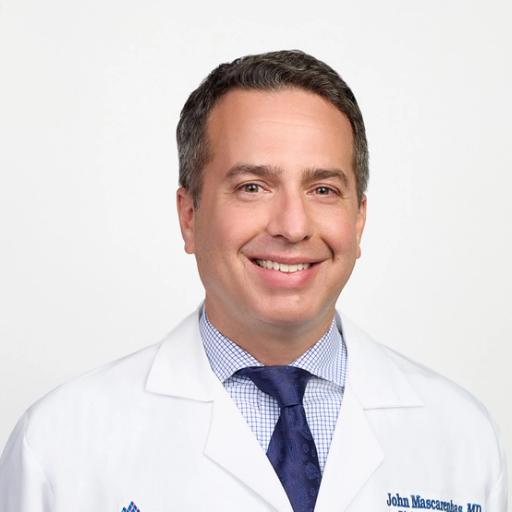
John Mascarenhas MD; ASCO 2026: New Janus Kinase Inhibitor Improves Myelofibrosis Outcomes When Added to Ruxolitinib Initial Therapy
CHICAGO, USA—Outcomes were improved for patients with myelofibrosis in the phase 3 SENTRY trial who were randomized to have the new Janus kinase inhibitor selinexor added to their ruxolitinib initial therapy.Findings were reported at the 2026 Annual Meeting of the American Society of Clinical Oncology.Peter Goodwin got the details from first author John Mascarenhas MD, Professor of Medicine and Director of the Center of Excellence for Blood Cancers and Myeloid Disorders at the Tisch Cancer Institute, Icahn School of Medicine, in Mount Sinai, New York, NY.

David R Spigel MD; ASCO 2026: EGFR Exon-20 Insertion Directed Initial Therapy Cuts Disease Progression in Patients with Advanced Non-Small Cell Lung Cancer
CHICAGO, USA—For patients with advanced non-small cell lung cancer harboring the rare exon-20 gene insertion,first-line treatment with the targeted drug sunvozertinib monotherapy brought statistically significant anti-tumor efficacy when compared with chemotherapy in the phase three WU-KONG28 study reported to the 2026 Annual Meeting of the American Society of Clinical Oncology by John V Heymach MD PhD, Professor and Chair of Thoracic and Head and Neck Medical Oncology, at the University of Texas MD Anderson Cancer Center, in Houston. After hearing Dr. Heymach’s talk, Audio Journal of Oncology reporter Peter Goodwin caught up with ASCO commentator David R Spigel MD, President and Chief Medical Officer at the Sarah Cannon Research Institute in Nashville, Tennessee. (An interview with David R Spigel MD, President & Chief Medical Officer, Sarah Cannon Research Institute, Nashville, Tennessee, US)

Robert C. Stein, PhD FRCP; ASCO 2026: Gene Test Finds Most Patients with High Risk ER-positive, HER2-negative Early Breast Cancer Do Not Benefit from Chemotherapy
The idea that all women with hormone dependent early breast cancers that test negative for the HER2 molecule and have high risk clinical factors should be receive chemotherapy in addition to endocrine therapy is now being strongly questioned. A new study using a gene expression test to predict recurrence risk has shown that most patients do not benefit from adding chemotherapy to their ongoing endocrine treatment. Results from the OPTIMA phase III randomized non-inferiority trial reported at the 2026 annual meeting of the American Society of Clinical Oncology suggest that the current standard of care recommending chemotherapy for high-risk groups needs to be changed. Peter Goodwin got the details of the study findings from first author, Robert C. Stein, PhD FRCP, Professor of Breast Oncology at University College, in London.

Bjørn Henning Grønberg MD PhD; ASCO 2026: Adding Thoracic Radiotherapy Did Not Prolong Lives of Patients with Extensive Stage Small Cell Lung Cancer Being Treated with Chemo-Immunotherapy. COMMENT: David R Spigel MD
Patients with extensive stage small cell lung cancer did not live longer with thoracic radiotherapy added to their chemo-immunotherapy in a study reported to the American Society of Clinical Oncology 2026 Annual Meeting held in Chicago, USA. First author Bjørn Henning Grønberg MD PhD, Professor and Consultant in Oncology at the Norwegian University of Science and Technology, St. Olavs Hospital in Trondheim, Norway talked with the Audio Journal of Oncology about his group’s findings.