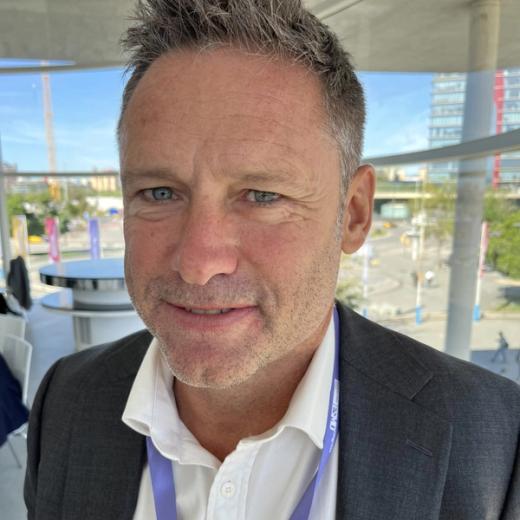
James Larkin FRCP, PhD: CheckMate 067 Study 10-Year Data Show Advanced Melanoma Landscape Transformed by Combo Checkpoint Inhibitor Therapy
James Larkin FRCP, PhD talks about the big changes in survival prospects for patients with advanced and metastatic melanoma that have take place over the last 10 years thanks to combination checkpoint
An interview with:
James Larkin FRCP, PhD, Medical Oncologist, Professor, Royal Marsden Hospital, London
Checkpoint inhibitor therapy for advanced melanoma has achieved sustained responses and long-term overall survival, transforming the prognosis for as many as half of all patients. 10-year survival outcomes from the phase Ill CheckMate 067 trial of nivolumab plus ipilimumab in advanced melanoma were reported at the 2024 Annual Meeting of the European Society for Medical Oncology (ESMO) held in Barcelona.
Peter Goodwin, talked with study author, James Larkin FRCP PhD, Professor and Medical Oncologist at the Royal Marsden Hospital in London.
Audio Journal of Oncology: James Larkin FRCP PhD: IN: “There’s been breath-taking progress ………OUT: join me then, Good-bye!” 14:57secs
SOURCE:
Annals of Oncology:
https://www.annalsofoncology.org/article/S0923-7534(24)03864-X/fulltext
ESMO Abstract LBA43
- Larkin, Medicine Department, The Royal Marsden Hospital, London, UK
“10-y survival outcomes from the phase Ill CheckMate 067 trial of nivolumab plus ipilimumab in advanced melanoma”
Abstract LBA43
- Larkin, Medicine Department, The Royal Marsden Hospital, London, UK
“10-y survival outcomes from the phase Ill CheckMate 067 trial of nivolumab plus ipilimumab in advanced melanoma”
Background
In CheckMate 067, improved survival with nivolumab plus ipilimumab (NIVO + IPI) or NIVO alone v IPI has been demonstrated in patients (pts) with advanced melanoma. We now provide the final CheckMate 067 results (minimum f/u 10 y), the longest reported in a phase 3 study of an anti–programmed death (PD)-1–based therapy for any tumor type.
Methods
Pts with untreated advanced melanoma (N = 945) were randomly assigned 1:1:1 and stratified by PD-ligand (L)1 status, BRAF mutation status, and metastasis stage to receive NIVO (1 mg/kg) + IPI (3 mg/kg) Q3W for 4 doses, followed by NIVO (3 mg/kg) Q2W; NIVO (3 mg/kg) Q2W + placebo; or IPI (3 mg/kg) Q3W for 4 doses + placebo until progression or unacceptable toxicity. Co-primary endpoints were OS and PFS with NIVO + IPI or NIVO v IPI; melanoma-specific survival (MSS) was an exploratory endpoint.
Results
After a 10-y minimum f/u, median OS was 71.9 mo with NIVO + IPI, 36.9 mo with NIVO, and 19.9 mo with IPI. OS HRs were 0.53 (95% CI, 0.44–0.65) with NIVO + IPI vIPI and 0.63 (0.52–0.76) for NIVO v IPI, and benefit was consistent across subgroups (including PD-L1 expression and BRAF mutation status). Median MSS was not reached (NR) with NIVO + IPI (> 120 mo), 49.4 mo with NIVO, and 21.9 mo with IPI. In pts who had PFS for ≥ 3 y, 10-y MSS rates were 96% with NIVO + IPI, 97% with NIVO, and 88% with IPI. Only 8 pts, 4 in the NIVO + IPI arm and 4 in the NIVO arm, progressed beyond 60-mo of f/u. For pts in the NIVO + IPI arm who discontinued treatment during induction due to a treatment-related adverse event, 10-y OS rates were the same as the ITT group (43%) and MSS rates were similar (50% v 52%). Table: LBA43”
MORE:
James Larkin is a Medical Oncologist specialising in the treatment of cancers of the kidney and skin including melanoma.
Professor Larkin grew up in North Cornwall before taking a first in Natural Sciences from Cambridge University. He undertook clinical training in Oxford, qualifying in 1996. His general medical training was undertaken in London and in 2001 he won a Medical Research Council Research Fellowship for a Clinician, carrying out laboratory research leading to a PhD at the Institute of Cancer Research. His specialist training was completed at The Royal Marsden, where he was appointed as a Consultant in 2008.
His research is focussed on trying to understand cancer and its consequences better, as well as developing improved treatments, particularly with targeted therapies and immunotherapies. Globally, he is amongst the most highly cited researchers in both melanoma and kidney cancerThis link is external and opens in a new tab.
In 2018, he was elected as a Fellow of the Academy of Medical Sciences and in 2020 as an NIHR Senior Investigator. In 2022, he was appointed to roles as Head of The Royal Marsden Skin Unit, Royal Marsden Joint Training Programme Director for Medical Oncology and Lead of the Cancer Immunotherapy Theme at The Royal Marsden / Institute of Cancer Research NIHR Biomedical Research Centre.
Since 2024, he has hosted the educational podcast ‘Melanoma Matters’ with his US colleague Professor Sapna Patel, and in 2026 he will be Scientific Co-Chair of the Annual European Society of Medical Oncology meeting in Madrid.
Professor Larkin serves as a medical advisor to the patient advocacy group Melanoma UK, as a trustee of Action Kidney Cancer and sits on the Medical Advisory Board of the International Kidney Cancer Coalition.
Tags
Related Episodes
Ahmad A Tarhini MD PhD, AACR 2026: Molecular Glue Brings New Hope for Patients with BRAF or NRAS-Mutant Melanoma or Other RAS/RAF-driven Malignancies
Molecular Glue Brings New Hope for Patients with BRAF or NRAS-Mutant Melanoma or Other RAS/RAF-driven Malignancies An interview with: Ahmad A Tahini MD PhD, Senior Member, Professor, Director, Departm

Juan Du MD PhD, ASH 2025: Dual Targeted FasTCAR-T Therapy brings Deep, Durable Responses to Patients with Newly Diagnosed Multiple Myeloma
Dr. Juan Du presented early phase one study findings at ASH 2025, detailing a novel dual-targeted FasTCAR-T therapy for newly diagnosed multiple myeloma. The study demonstrated deep, durable responses in patients using the BCMA and CD19-targeting CAR T-cell platform, GC012F/AZD0120. These promising results, consistent across all dose groups, highlight a highly favorable safety profile and potential for patients, including those with high-risk features and transplant-ineligible individuals.
Gaorav Gupta MD PhD; SABCS 2025: Pre-Op Radiation Improved T-cell Infiltration in Hormone Receptor-positive, HER2-negative Invasive Breast Cancer; Could Boost Systemic Therapy Responses
At SABCS 2025, Gaorav Gupta MD PhD presented findings from the TBCRC-053 (P-RAD) study. The research showed that pre-operative radiation therapy significantly increased T-cell infiltration in hormone receptor-positive, HER2-negative invasive breast cancer. This novel approach could enhance anti-tumor immunity and boost responses to systemic therapies like immunotherapy and chemotherapy in this common breast cancer subtype.