Partial breast irradiation, given before breast-conserving surgery, achieved durable pathologic complete remissions in low-risk breast cancer, and even held out the prospect of surgery-free treatment
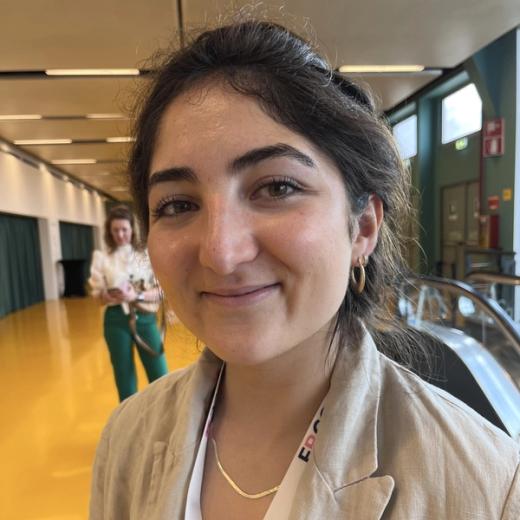
An interview with Yasmin Civil MD PhD, UMC Hospital, Amsterdam, Netherlands.
MILAN, Italy—Offering MRI-guided partial breast irradiation before surgery to patients with low-risk breast cancer could become the norm, according to Yasmin Civil MD PhD from the UMC Hospital in Amsterdam, who reported five-year results from the ABLATIVE trial of pre-operative MRI-guided single dose partial breast irradiation to the 14th European Breast Cancer Conference.
Partial breast irradiation, given before breast-conserving surgery, achieved durable pathologic complete remissions in low-risk breast cancer, and even held out the prospect of surgery-free treatment for some patients.
After giving her talk in Milan, Dr. Civil discussed the details of the ABLATIVE study findings with Peter Goodwin:
AUDIO JOURNAL OF ONCOLOGY Podcast:
IN: (PETER GOODWIN) “If you are treating …… …OUT: …… for the Audio Journal of Oncology, I’m Peter Goodwin. (9:13sec)
ABSTRACT:
https://www.ejcancer.com/article/S0959-8049(24)00203-X/abstract#%20
“Pre-operative magnetic resonance guided single dose partial breast irradiation: five-year results of the ABLATIVE trial”
BACKGROUND:
Preoperative partial breast irradiation (PBI) can result in decreased irradiated volumes compared with postoperative PBI and may therefore lead to lesstoxicity and improved cosmetic outcome. In the multicenter ABLATIVE trial (NCT02316561), 15/36 patients achieved pathologic complete response 6–8 months after preoperative single-dose PBI. We now present long-term outcomes of preoperative single-dose PBI and breast conserving surgery (BCS) including late toxicity, tumor recurrence, survival, cosmetic outcome and quality of life in low-risk breast cancer patients.
PROTOCOL:
The ABLATIVE-2 trial is a multicenter prospective single-arm trial using single-dose ablative PBI in low-risk breast cancer patients. Patients ≥ 50 years with non-lobular invasive breast cancer ≤ 2 cm, grade 1 or 2, estrogen receptor-positive, HER2-negative, and tumor-negative sentinel node procedure are eligible. PBI treatment planning performed using a radiotherapy planning CT and -MRI in treatment position. The treatment delivery on a conventional or MR-guided linear accelerator. The prescribed radiotherapy dose is a single dose of 20 Gy to the tumor, and 15 Gy to the 2 cm of breast tissue surrounding the tumor. Follow-up MRIs, scheduled at baseline, 2 weeks, 3, 6, 9, and 12 months after PBI, are combined with liquid biopsies to identify biomarkers for pCR prediction. BCS performed 12 months after radiotherapy or after 6 months, if MRI does not show a radiologic complete response. The primary endpoint is the pCR rate after PBI. Secondary endpoints are radiologic response, toxicity, quality of life, cosmetic outcome, patient distress, oncological outcomes, and the evaluation of biomarkers in liquid biopsies and tumor tissue.
Related Episodes

Fleur Mauritz MD; EBCC 2026: RAPCHEM Study Shows Risk-Based Radiotherapy De-Escalation is Safe After Primary Systemic Therapy for Early Breast Cancer
Fleur Mauritz MD discusses the 10-year follow-up findings from the RAPCHEM study, presented at the EBCC 2026. The research indicates that risk-based radiotherapy de-escalation is safe and effective following primary systemic therapy for early breast cancer patients. This approach allows for tailored treatment, potentially reducing side effects without compromising low recurrence rates. The study provides crucial long-term evidence supporting individualized radiotherapy strategies.

Jelle Wesseling MD PhD; 2026 EBCC: ‘Lord’ Trial Finds Active Surveillance for Estrogen-Receptor-Positive, HER2- Negative, Grade 1–2 DCIS Just As Effective as Standard Therapy
At the 2026 EBCC, Jelle Wesseling MD PhD discusses the LORD-trial, which found active surveillance for low-risk, estrogen-receptor-positive, HER2-negative, grade 1–2 DCIS is as effective as standard therapy. The trial's reassuring findings led to early cessation of randomization, supporting de-escal

Elisa Agostinetto MD; 2026 EBCC: Circulating Tumor DNA Trumps Clinical Prognostic Markers After Neoadjuvant Therapy for Patients with Early Breast Cancer
Elisa Agostinetto MD presented at EBCC 2026, highlighting circulating tumor DNA (ctDNA) as a superior prognostic marker over clinical indicators for predicting relapse and progression in early breast cancer patients after neoadjuvant therapy. This research supports ctDNA for post-neoadjuvant risk st