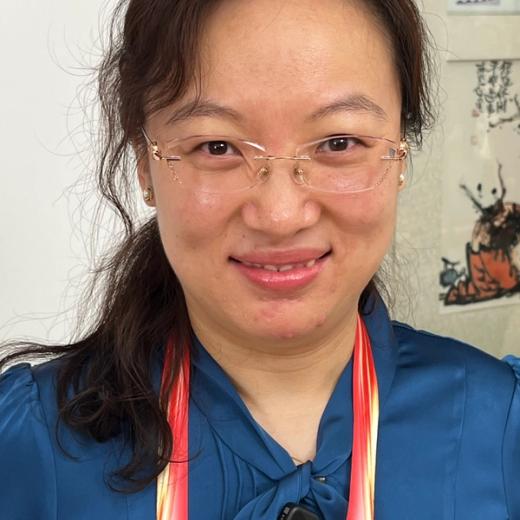
Jiujie Cui MD PhD, CSCO 2026: Early Findings Show KRAS-G12D Inhibitor More than Doubles Median Overall Survival in Patients with Advanced Pancreatic Cancer
JINAN, China—A highly selective drug that inhibits the predominant oncogenic driver (the KRAS-G12D mutation) in advanced pancreatic ductal adenocarcinoma, and minimizes side effects, has shown big promise for keeping patients alive and progression-free. This was in early trial results reported at the 2026 Annual Meeting of the Chinese Society of Clinical Oncology. In phase 1b/2 study results, Chinese researchers reported marked improvements in outcomes that mirror the 2026 findings from the USA reported in the New England Journal of Medicine with a multi-selective RAS inhibitor. Peter Goodwin heard the latest from the study first author: medical oncologist Jiujie Cui MD PhD, from Renji Hospital at Shanghai Jiaotong University School of Medicine, in Shanghai, China.
Early Findings Show KRAS-G12D Inhibitor More than Doubles Median Overall Survival in Patients with Advanced Pancreatic Cancer
An interview with:
Jiujie Cui MD PhD, Medical Oncologist, Renji Hospital, Shanghai Jiaotong University School of Medicine, Shanghai, China
JINAN, China—A highly selective drug that inhibits the predominant oncogenic driver (the KRAS-G12D mutation) in advanced pancreatic ductal adenocarcinoma, and minimizes side effects, has shown big promise for keeping patients alive and progression-free. This was in early trial results reported at the 2026 Annual Meeting of the Chinese Society of Clinical Oncology.
In phase 1b/2 study results, Chinese researchers reported marked improvements in outcomes that mirror the 2026 findings from the USA reported in the New England Journal of Medicine with a multi-selective RAS inhibitor. Peter Goodwin heard the latest from the study first author: medical oncologist Jiujie Cui MD PhD, from Renji Hospital at Shanghai Jiaotong University School of Medicine, in Shanghai, China.
AUDIO JOURNAL OF ONCOLOGY, Jiujie Cui MD PhD:
IN: “I’m here at ….
OUT:…….for the Audio Journal of Oncology, I’m Peter Goodwin. 10:24 secs
Reference:
https://www.nature.com/articles/s41591-026-04538-9
KRAS-G12D inhibitor HRS-4642 plus chemotherapy in advanced KRASG12D-mutant pancreatic cancer: a phase 1b/2 trial
Abstract:
KRASG12D is the predominant oncogenic driver in pancreatic ductal adenocarcinoma (PDAC). While most investigational KRAS-G12D inhibitors are oral small molecules limited by gastrointestinal toxicities and suboptimal tumor exposure, HRS-4642 is a new, high‑affinity, noncovalent KRAS-G12D inhibitor. Formulated as a liposomal nanoparticle for intravenous administration, it is designed to enhance tumor accumulation and prolong the duration of target inhibition. This phase 1b/2 study evaluated HRS-4642 in combination with nab-paclitaxel and gemcitabine (AG) in patients with advanced KRASG12D-mutant PDAC. As of 5 December 2025, 68 patients were screened and 31 (1 previously treated patient and 30 treatment-naive patients) were enrolled and treated.
In the phase 1b portion, no dose-limiting toxicities were observed, and the starting dose (500 mg on day 1 and 1,200 mg on day 8, every 3 weeks) was selected as the recommended phase 2 dose.
In the phase 2 portion, with a median follow-up of 12.3 months (95% confidence interval (CI) = 12.2–13.0), the primary endpoint was met—the confirmed objective response rate in 30 treatment-naive patients was 63.3% (95% CI = 43.9–80.1).
Grade ≥3 treatment-related adverse events (TRAEs) occurred in 90.3% patients, primarily hematologic toxicities consistent with AG chemotherapy.
No TRAEs led to treatment discontinuation or death. In conclusion, HRS-4642 combined with AG demonstrates promising antitumor activity and a manageable safety profile in advanced KRASG12D-mutant PDAC, supporting further investigation.
Related Episodes
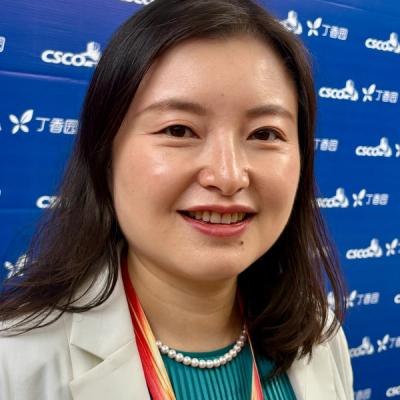
Feng Wang PhD MD; CSCO 2026: Progress and Prospects of New Drug Research for Colorectal Cancer: The View from China
JINAN, China—The 2026 Annual Meeting of the Chinese Society of Clinical Oncology, with more than 40 000 cancer clinicians attending, heard evidence from clinical trial findings and new science bringing great hope for the treatment of colorectal cancer. The era of targeted precision medicine for colorectal cancer had truly arrived, delegates heard, with a long list of potential targets identified by genetic testing, and an impressive range of promising agents to match them to treat cancer in new and more effective ways. In an abstract entitled: “Progress and Prospects of New Drug Research for Colorectal Cancer”, the latest state of the art in colorectal cancer research was assessed by Feng Wang PhD MD, Director of Medical Oncology at Sun Yat-sen University Cancer Center, in Guangzhou, China. Afterwards, she talked with our reporter, Peter Goodwin: