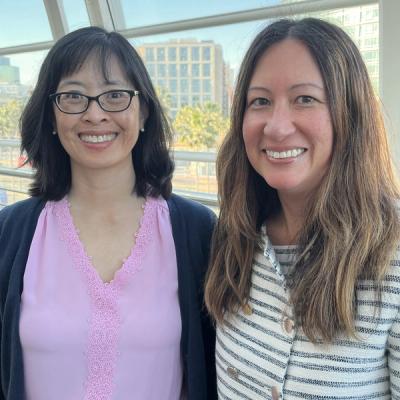
BRCA-deficient cancers respond to combination of two experimental drugs
WASHINGTON DC—Doctors taking the unusual step of combining two experimental drugs to treat cancers in patients who have mutated BRCA — the gene conferring susceptibility to breast, ovarian and some ot

WASHINGTON DC—Doctors taking the unusual step of combining two experimental drugs to treat cancers in patients who have mutated BRCA — the gene conferring susceptibility to breast, ovarian and some other solid tumours — found that patients responded through what appears to be a synergistic action. Dr Geoffrey Shapiro, Director of the Early Drug Development Center at the Dana-Farber Cancer Institute in Boston presented findings at the American Association for Cancer Research Annual Meeting on the combination of sapacitabine (a nucleoside analogue) and seleciclib (a cyclin-dependent kinase inhibitor). He discussed the clinical potential of this technique with Peter Goodwin.
Next in AACR 2013
All 5 interviewsInterview 2 of 5

Treatment “holidays” to overcome resistance in advanced melanoma?
WASHINGTON DC—Laboratory evidence that giving patients intermittent rather than continuous treatment with cancer drugs could help them overcome drug resistance in cancers such as melanoma was presente
Related Episodes

Victor Velculescu MD PhD: Ovarian Cancer Noninvasive Detection by Circulating DNA Fragmentome and Protein Biomarker AI Analysis
Victor E Velculescu MD PhD
Timothy Yap MD PhD MBBS: Selective PARP1 Inhibitor Saruparib Clinical Promise in Solid Tumors with Homologous Recombination Repair Deficiency
Timothy Yap MD PhD MBBS selective PARP inhibitor promise in breast, ovarian, pancreatic, prostate tumors.